Introduction: The Evolution of Funeral Services
The funeral industry is experiencing one of the most significant periods of change in its history. Shaped by digital transformation, shifting demographics and evolving expectations around remembrance, funeral services are no longer confined to physical spaces alone. By 2026, funeral directors who embrace innovation—particularly online memorials—will be best placed to meet the needs of modern families.
For funeral professionals, this change is not about replacing tradition, but enhancing it. Online memorials offer a way to extend care beyond the day of the funeral, creating lasting spaces for remembrance that align with how people live, communicate and grieve today.
Across the UK and internationally, the funeral sector is balancing tradition with innovation. Families continue to value dignity, professionalism and personal care, yet they increasingly expect digital convenience and flexibility.
Across the UK and internationally, the funeral sector is balancing tradition with innovation. Families continue to value dignity, professionalism and personal care, yet they increasingly expect digital convenience and flexibility.
Rising cremation rates, more personalised services and an increase in remote attendees have already reshaped funeral planning. Many funeral directors now stream services, manage digital death notices and communicate with families online. These shifts provide a strong foundation for the next phase of transformation: online memorialisation.
Drivers of Change in the Funeral Sector
Several key forces are shaping the industry’s direction towards 2026.
An ageing population is increasing demand for services, while younger generations—who are digitally fluent—are influencing how remembrance is expressed. At the same time, geographical mobility means families are often spread across cities or countries, making physical attendance more difficult.
Cultural attitudes towards death are also changing. There is greater openness about grief, remembrance and celebration of life, alongside a desire for more personal, ongoing forms of memorialisation. Technology now makes this possible in ways that were unimaginable just a decade ago.
What Are Online Memorials?
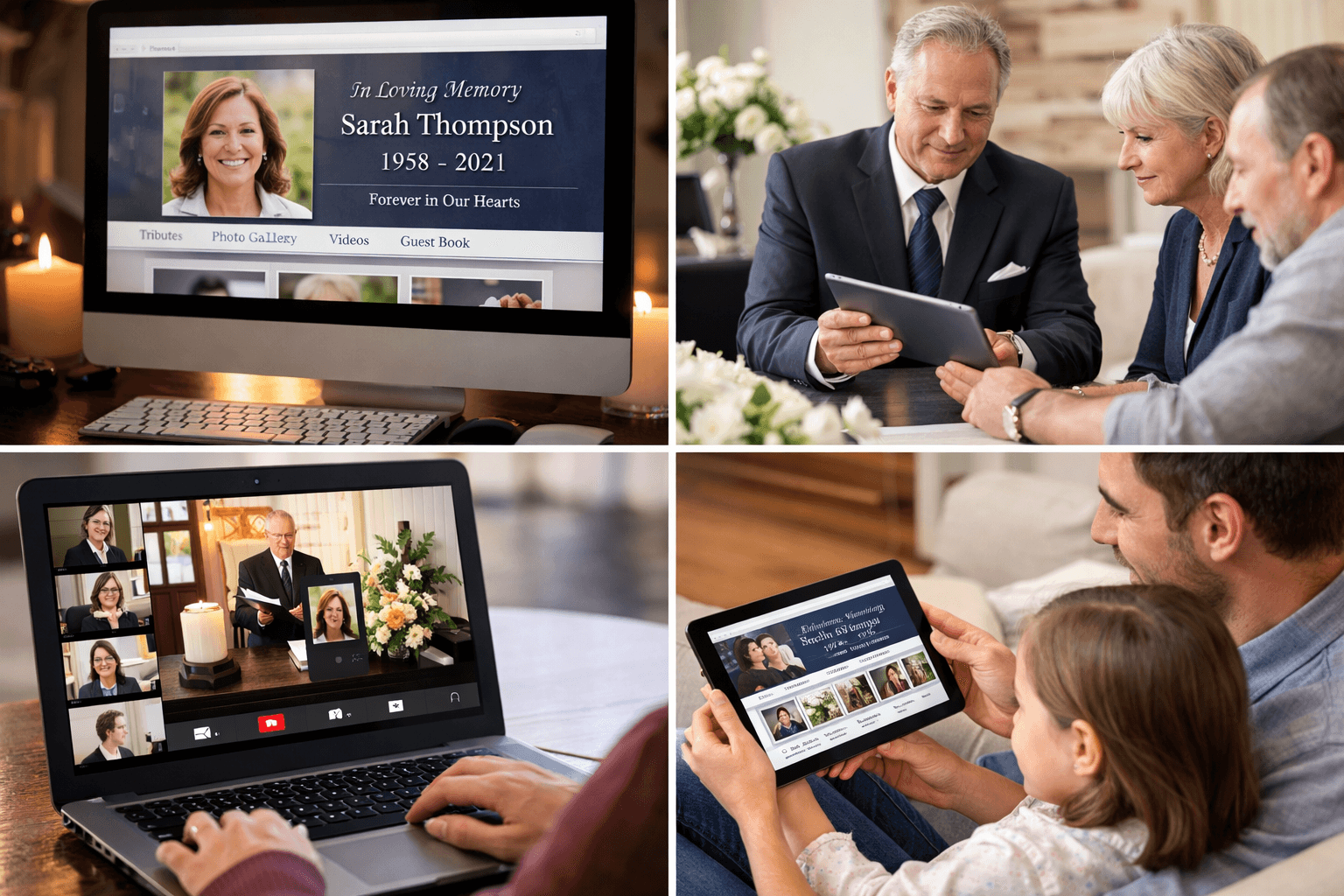
Online memorials are digital spaces dedicated to remembering a loved one. They may include photographs, videos, written tributes, life stories, music, funeral details and anniversaries. Many platforms also allow friends and family to leave messages, light virtual candles or share memories over time.
Unlike traditional memorials, online memorials are not limited by geography or opening hours. They are accessible at any time, allowing families to return whenever they feel the need to connect and reflect.
Why Online Memorials Matter for Funeral Directors
For funeral directors, online memorials represent both a service enhancement and a strategic opportunity. They extend your role beyond the funeral itself, positioning your business as a long-term partner in remembrance.
Offering online memorials adds emotional value for families, particularly those who cannot attend in person or who wish to continue commemorating anniversaries and milestones. From a business perspective, they support differentiation in a competitive market and can be incorporated into service packages or aftercare programmes.
Funeral Industry Forecast to 2026
Looking ahead to 2026, the funeral industry is expected to continue its gradual growth, with digital services becoming a standard expectation rather than a niche offering. Families will increasingly compare providers based on the full experience offered, not just the funeral day itself.
Online memorials are forecast to move from “optional extra” to an integral part of modern funeral services. Funeral directors who adopt these tools early will be better positioned to meet evolving expectations and maintain relevance in a changing market.
The Role of Digital Memorialisation in 2026
By 2026, digital memorialisation is likely to be seamlessly integrated into traditional funeral care. Online memorials will work alongside physical services, printed orders of service and permanent memorials, creating a blended experience.
Hybrid funerals—combining in-person attendance with online participation—will continue to grow, with online memorials acting as the central hub before and after the service. This ensures that remembrance does not end when the ceremony concludes.
Technology Trends Shaping Online Memorials
Advances in technology are making online memorials more meaningful and accessible. Personalisation tools allow families to create unique spaces that truly reflect the individual’s life, personality and values.
Artificial intelligence may support features such as curated memory timelines or anniversary reminders, while improved mobile access ensures memorials are easily viewed and updated on smartphones and tablets. These developments enhance usability without detracting from sensitivity.
Case Studies: Funeral Homes Embracing Online Memorials
Funeral homes that have successfully integrated online memorials report stronger engagement with families and increased referrals. By offering a digital space where memories can grow over time, they remain connected with families long after the funeral.
These businesses often highlight online memorials as part of their compassionate aftercare, reinforcing trust and professionalism. The key lesson from early adopters is clear: simplicity, sensitivity and clear guidance are essential.
Challenges and Considerations for Funeral Directors
Despite their benefits, online memorials must be managed carefully. Data privacy, content moderation and long-term hosting are important considerations. Families need reassurance that their loved one’s memorial will remain secure and respectful.
Funeral directors should work with reputable technology partners and ensure clear communication with families about how online memorials are managed, updated and maintained over time.
Marketing Online Memorial Services Effectively
Communicating the value of online memorials requires empathy and clarity. Families should never feel pressured, but gently informed about how these services can support remembrance and connection.
From a marketing perspective, online memorials also support visibility. Memorial pages can improve local search presence, while demonstrating that your business offers modern, family-centred services. Clear explanations on your website and in consultations are key.
Integrating Online Memorials into Daily Operations
Operationally, online memorials can be smoothly integrated with minimal disruption. Staff training should focus on explaining benefits sensitively and assisting families with setup where needed.
Choosing the right platform is essential. Funeral directors should look for solutions that are easy to use, customisable and aligned with their brand values, while offering ongoing technical support.
Future Consumer Expectations
By 2026, families will expect funeral services to reflect individuality, accessibility and continuity. Online memorials meet these expectations by offering personal, evolving spaces that can be shared across generations.
Community interaction will also play a greater role, with memorials acting as gathering points for shared remembrance, particularly on anniversaries or significant dates.
Conclusion: Preparing for the Future of Funeral Care
The funeral industry’s future lies in balancing tradition with thoughtful innovation. Online memorials are not a passing trend—they are a natural extension of how people remember, connect and grieve in a digital world.
For funeral directors, embracing online memorials by 2026 is an opportunity to enhance care, strengthen relationships with families and future-proof services. Those who act now will be well positioned to lead with compassion, relevance and confidence in the years ahead.