Creating a life timeline is one of the most meaningful ways to commemorate a person’s journey. Whether crafted as part of an online memorial or prepared to share at a funeral or celebration of life, a timeline preserves not only events but the essence of who someone was. For families and future generations, it becomes a treasured record of origins, values, experiences, and cherished memories.
Understanding the Purpose of a Life Timeline
A life timeline is a visual or written record of the key events, milestones, and memorable moments that shaped someone’s life. It serves as a narrative backbone for remembering a loved one, helping those left behind to reflect on the beautiful arc of their journey.
More than a simple chronology, a timeline captures meaning: how a person grew, the challenges they overcame, the passions they pursued, and the relationships that defined them. For families, it provides comfort and a sense of continuity. For future generations, it becomes a legacy—an anchor to their own identity and history.
A well-crafted timeline also supports emotional healing. By revisiting memories, families often find opportunities to laugh, cry, and reconnect as they share stories.
The Role of Online Memorials in Modern Remembrance
Online memorials have become a powerful and accessible way to preserve memories, offering much more flexibility than traditional scrapbooks or photo albums.
These digital spaces allow families to share stories, photos, videos, and messages in a format that can be visited from anywhere in the world. They also make collaborative remembrance easier—friends, colleagues, and distant relatives can contribute their own anecdotes, enriching the narrative.
Online memorials ensure memories are never confined to a single place or dependent on physical items that may fade or be lost. Instead, they provide a secure, long-lasting home for a loved one’s story.
Choosing the Right Format for Your Life Timeline
There is no single correct way to create a life timeline. Depending on personal preference and available materials, you may choose:
- Written timelines using paragraphs or bullet points
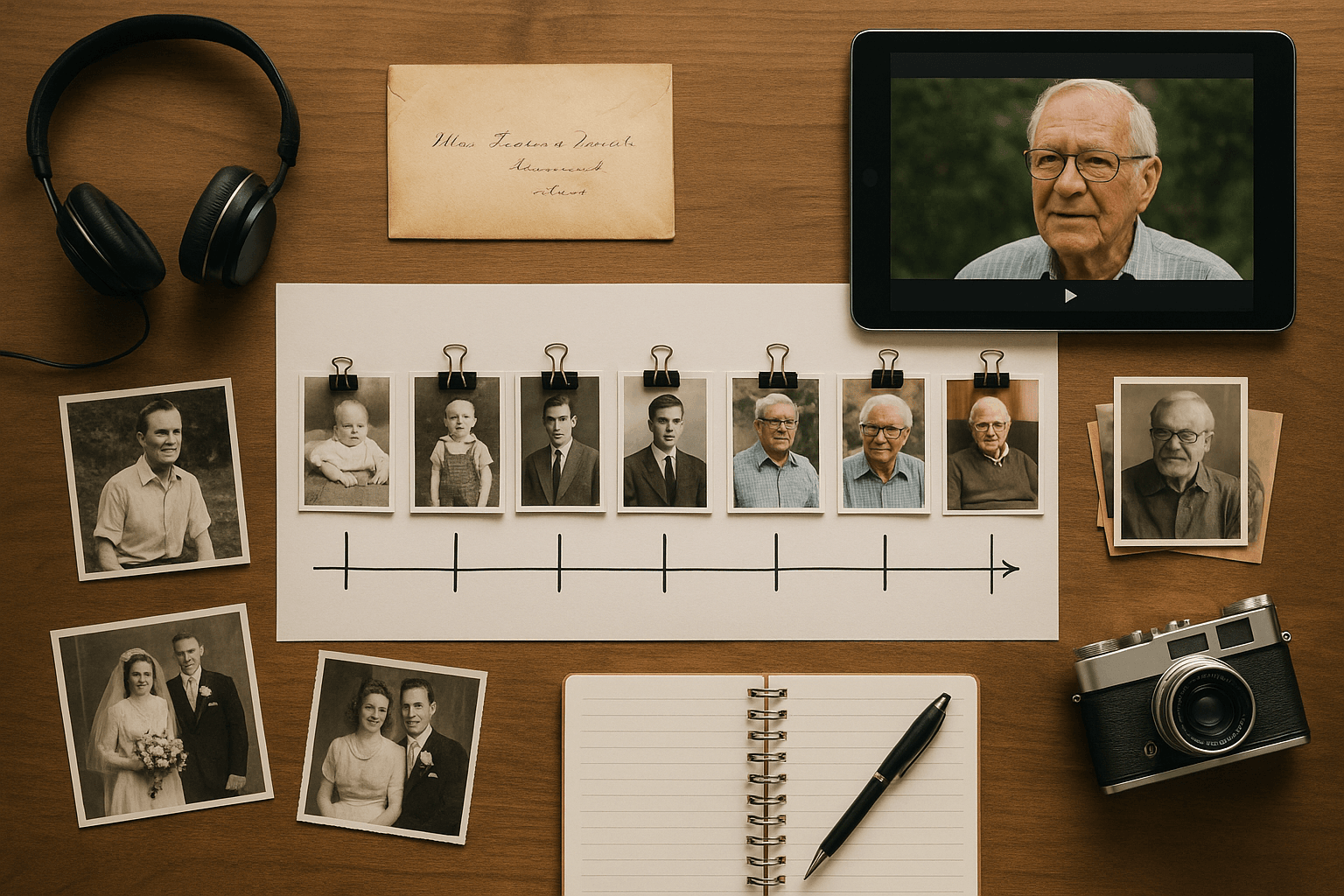
- Visual timelines using images and dates
- Audio timelines featuring recorded memories
- Digital interactive timelines hosted on an online memorial platform
Many families combine several formats. For example, a written timeline may include photographs, voice recordings of family members reminiscing, and short video clips.
If you intend to share the timeline widely, or ensure long-term accessibility, an online memorial platform is often the most practical choice.
Gathering Key Life Information and Milestones
To begin, collect the essential life details. These often include:
- Birth and early years: childhood memories, first friends, early influences
- Education: schools attended, favourite subjects, proud achievements
- Career and accomplishments: milestones, promotions, special projects
- Relationships: significant partnerships, marriages, children, lifelong friends
- Major life events: moves, travels, turning points, challenges overcome
- Passions and interests: hobbies, talents, causes they cared about
- Personal values: beliefs, guiding principles, sayings they lived by
Not every detail needs to be included, but gathering widely at this early stage helps you build a fuller picture.
Collecting Stories, Memories, and Anecdotes
While milestones form the skeleton of a timeline, stories give it heart. Speak with family and friends to gather anecdotes—small moments that reveal personality, humour, kindness, and quirks.
Useful prompts include:
- What made them smile or laugh?
- What qualities defined them?
- What stories were told again and again at family gatherings?
- What did they love doing more than anything else?
These stories help the timeline become a living tribute rather than a list of facts.
Working with Photographs and Visual Memories
Photographs enrich any life timeline, allowing readers to connect more deeply with each period of a person’s life. Start by gathering physical albums, digital galleries, and images from relatives.
When organising photos:
- Group them by decade or theme.
- Choose images that capture personality, not just posed moments.
- Digitise older photographs so they can be stored and shared online.
Some families use photo restoration tools to enhance faded images, ensuring they remain clear for future generations.
Incorporating Videos, Voice Notes, and Letters
Multimedia elements add depth and warmth to a timeline. A short video clip, a saved voicemail, or a handwritten letter can often convey emotion more powerfully than text alone.
Consider including:
- Video messages or recordings that feature the person speaking
- Audio recordings from family members sharing memories
- Scans of letters, cards, and meaningful notes
When preserving these items online, ensure you use reputable platforms with strong security and long-term storage options.
Structuring the Life Timeline Chronologically
A chronological structure is the easiest for readers to follow. Many families use a decade-by-decade approach, which helps break long lives into manageable eras.
Alternatively, thematic timelines can work well, such as:
- “Adventures and Travels”
- “Passions and Hobbies”
- “Career Highlights”
- “Family and Relationships”
Choose whichever structure feels most reflective of the person’s story.
Writing the Narrative: Tone, Style, and Sensitivity
The tone of the narrative should feel warm, respectful, and honest. It’s important to acknowledge both triumphs and challenges without overwhelming readers or causing distress.
Balance factual detail with gentle storytelling. Aim for clarity, compassion, and authenticity. Imagine you are guiding someone who never met your loved one through the most meaningful parts of their life.
Creating a Life Timeline for a Recently Departed Loved One
When grief is fresh, creating a life timeline can feel emotional, yet it often becomes a healing process. Families may find comfort in focusing on cherished memories and celebrating the person’s individuality.
Choose a pace that feels right—there is no deadline. Encourage family members to participate, even if only by sharing small memories or favourite photographs.
Often, these shared contributions reveal stories no one person could tell on their own.
Helping Families Create Life Timelines: A Guide for Funeral Directors
Funeral directors play a vital role in supporting families during remembrance planning. Offering templates, guidance, or digital services can help families create meaningful tributes at a time when they may feel overwhelmed.
Funeral homes may also provide:
- Digital timeline creation assistance
- Access to online memorial platforms
- Professionally printed life timeline boards for services
- Video tribute packages
These value-added services help families feel supported while enhancing the memorial experience.
Using Online Memorial Platforms for Timeline Creation
Online memorial platforms simplify the process of building, storing, and sharing a life timeline. Key features to look for include:
- Easy timeline-building tools
- Photo, video, and audio upload options
- Guestbook or comment sections
- Privacy controls
- Long-term hosting and backup systems
Privacy and digital legacy planning are particularly important. Families should choose platforms that allow control over who can view or contribute to the memorial.
Preserving Stories for Future Generations
A life timeline becomes a gift to future generations. It allows grandchildren, great-grandchildren, and beyond to understand their roots, discover the values passed down through the family, and learn the stories that shaped their heritage.
Preserving this information online ensures it remains available even if physical items are lost or damaged. As technology continues to advance, digital legacies are becoming essential parts of family history.
Final Touches: Sharing and Celebrating the Completed Timeline
Once complete, a life timeline becomes something to share and celebrate. Many families choose to display the timeline at memorial services or celebrations of life.
Digital versions can be shared with relatives across the world, ensuring everyone can take part in remembering. And most importantly, a timeline never needs to be “finished”. Over time, families can continue adding stories, memories, and reflections.