Choosing a qr code memorial marker for a headstone is a practical decision as much as an emotional one, and this buyer’s guide is for Australian families and funeral planners who want the physical marker itself to last. It compares materials, weatherproofing, mounting methods and code longevity, then explains how a marker – whether bought from a monument mason or ordered through Forever In Our Hearts – connects visitors to an online tribute.
TL;DR
- A QR memorial marker is a small physical plaque, disc or tag fixed to a headstone, niche or garden memorial that visitors scan to open an online tribute.
- Stainless steel and ceramic markers offer the longest outdoor lifespan; printed vinyl or laminate labels are cheaper but degrade faster in Australian weather.
- Mounting method depends on the headstone material – adhesive, screw-fix or recessed inlay are the three common options, each suited to different stone or metal surfaces.
- A scratched, faded or cracked QR code can become unreadable, so check what happens to the linked page and whether a replacement marker is available before you buy.
- Forever In Our Hearts supplies the digital memorial and a secure QR code for $59 AUD one-time, but does not manufacture an engraved physical plaque – many families pair its QR code with a marker from a monument mason or specialist QR-plaque provider.
- Check whether the marker provider lets you update the destination link later, since memorial content often grows over the years.
Context and Audience: Why the Physical Marker Matters
Most discussions of QR memorials focus on the digital tribute – the photos, the guest book, the life story. Far less is written about the small object that actually carries the code at the gravesite: the marker itself. For families choosing a permanent fixture for a headstone, plaque or memorial garden, the physical product deserves the same scrutiny as the digital content behind it.
This guide is for families, executors and funeral planners who have already decided they want a physical marker at a resting place and now need to choose the right product – not which online platform to use, but which object will sit on stone or metal, exposed to an Australian climate, for years or decades. If you are still deciding whether a QR memorial is right for your family at all, our guide to how QR memorials work and our comparison of QR memorial platforms cover that ground in more depth.
Outdoor signage and fittings in Australia face a harder environment than most buyers expect. The Bureau of Meteorology’s climate data shows that many cemetery and memorial garden sites experience temperature swings, direct UV exposure and heavy seasonal rain – all of which affect adhesives, printed coatings and metal finishes differently. A marker chosen without considering these factors may need replacing well before the family expects.
Material Options for a QR Code Memorial Marker
Three material categories cover most of the physical QR markers sold by Australian monument masons and specialist providers. Each has a different durability and cost profile.
Stainless Steel
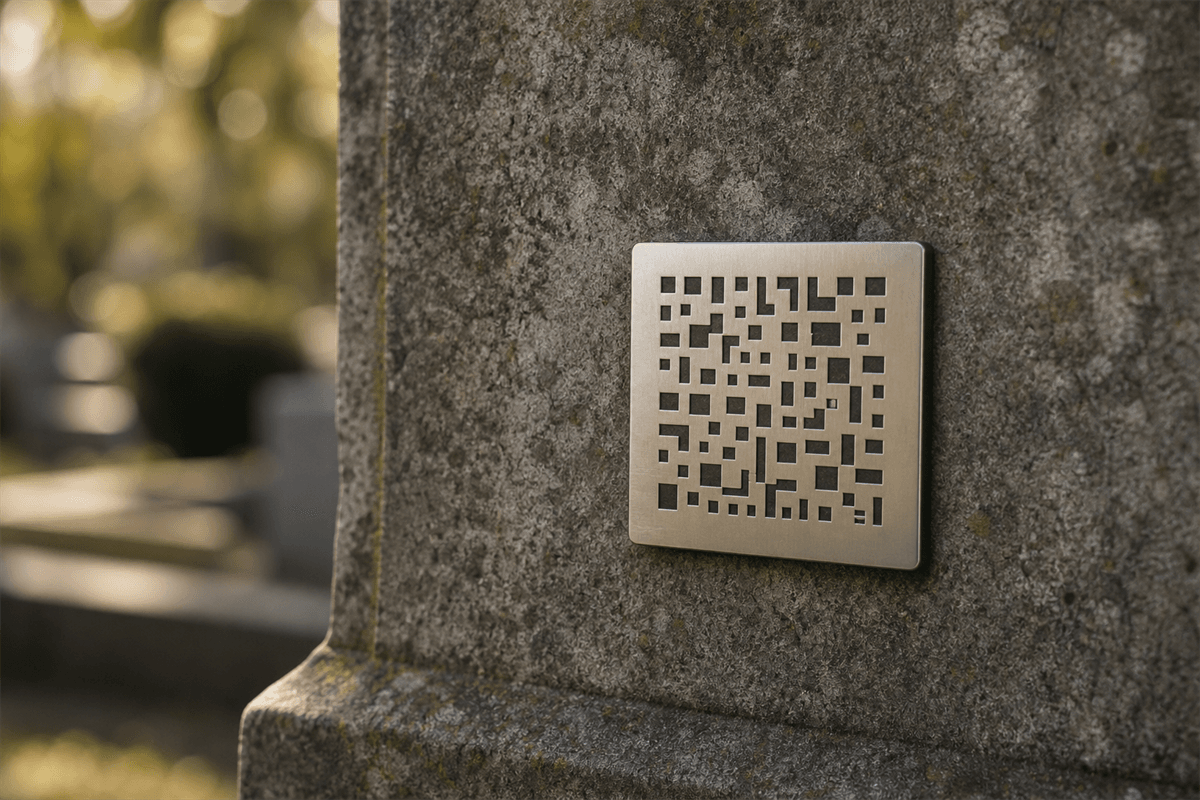
Stainless steel is the most common choice for graveside markers because it resists corrosion, holds a laser-engraved pattern without fading, and tolerates direct sun and rain for many years. The QR pattern is typically etched or laser-marked directly into the metal rather than printed, which means there is no surface coating that can peel or wear away. Stainless steel markers cost more upfront – often from roughly $150 to $250 AUD depending on size and finish – but they are the closest thing to a permanent solution among physical QR products.
Ceramic
Ceramic memorial plaques, including those with a fired or glazed QR pattern, are a traditional choice for Australian and European-style headstones and are valued for their appearance alongside engraved lettering. A well-fired ceramic plaque resists UV fading and moisture better than printed materials, though it is more brittle than steel and can crack if struck or if the mounting surface shifts with ground movement. Ceramic suits headstones where a classic look matters as much as durability.
Weatherproof Vinyl or Laminate
Printed vinyl or laminated QR labels are the most affordable option, often used on temporary grave markers, niche plaques in mausoleums, or as an interim solution while a family decides on a permanent fixture. They are far more vulnerable to UV breakdown, scratching and edge-lifting than steel or ceramic. A laminate label left in direct sun in most Australian states can visibly fade within one to three years. These are reasonable as a short-term or indoor-adjacent solution but are not recommended as the only marker at an exposed outdoor gravesite.
Durability and Weatherproofing for Graveside Conditions
A marker’s real test is years of exposure, not its appearance on the day it is installed. When comparing products, ask the supplier about each of the following:
- UV resistance: Does the QR pattern fade under sustained sun exposure, and is there a manufacturer warranty period for legibility?
- Water ingress: Is the marker fully sealed, or does it rely on a surface coating that can lift after repeated wet-dry cycles?
- Corrosion resistance: For metal markers, is the grade of stainless steel suited to coastal or high-humidity sites, where lower grades can develop surface rust over time?
- Temperature tolerance: Will the material crack or warp across hot summers and cold nights, particularly in regions with larger day-night temperature swings?
- Contrast and scan reliability: Does the QR pattern keep enough contrast between light and dark modules as the surface weathers, since a worn or low-contrast code becomes harder for phone cameras to read even before it is visibly damaged?
Engraving standards used in the monumental trade are similar to those covering outdoor signage more broadly. The Standards Australia body maintains general material and weathering standards referenced by manufacturers of outdoor fittings, and asking a supplier whether their marker materials meet a recognised outdoor signage or marine-grade standard is a reasonable buying question.
Mounting and Attachment Methods
How a marker attaches to a headstone or memorial often matters as much as the material itself. The right method depends on the surface.
Adhesive Mounting
Construction-grade outdoor adhesive is the most common method for fixing a small plaque or disc to polished granite, marble or smooth stone. It is quick to install and does not require drilling into the headstone, which some families and cemetery rules prefer. The trade-off is that adhesive bonds can weaken over years of thermal expansion and contraction, particularly on polished or sealed stone surfaces, so check the adhesive manufacturer’s expected outdoor lifespan.
Screw-Fix Mounting
Screw-fixing into pre-drilled stone or into a separate mounting plate gives a more mechanically secure result and is often used for larger plaques or in cemeteries with looser ground conditions. This method usually requires the headstone or kerb to be drilled, which some cemetery authorities restrict or require permission for, so it is worth checking local cemetery rules before committing to this approach. State cemetery regulators such as the Victorian Cemeteries and Crematoria operators publish memorial and monumental work guidelines that explain what modifications are permitted on existing headstones.
Recessed Inlay
Some monument masons can recess a marker into the stone itself during headstone manufacture or as a later modification, sitting the QR plaque flush with the surface. This is the most durable mounting method because it removes exposed edges that can catch moisture or be knocked loose, but it generally needs to be planned at the time the headstone is made or requires specialist stonemasonry work afterwards.
Standalone Garden Markers and Niche Plaques
For cremation memorial gardens, columbarium niches or plaques rather than upright headstones, smaller adhesive discs or screw-fixed tags are typically used on the niche door or a dedicated small plaque, since these surfaces are usually metal, glass or a smaller stone panel rather than a full headstone face.
Code Longevity: What Happens When a Code Degrades
A QR code is only useful while it can be scanned and while it points somewhere worthwhile. Two separate risks are worth understanding before you buy a marker.
Physical Degradation of the Code Itself
If the printed or engraved pattern fades, scratches or loses contrast, phone cameras may stop recognising it. QR codes have built-in error correction that allows a percentage of the pattern to be obscured or damaged and still scan correctly, but this tolerance has limits – heavy fading or a deep scratch through the corner alignment squares can make a code unreadable well before it looks obviously damaged to the eye. Ask any marker supplier what happens if the code fails: some offer a replacement marker using the same destination link, while cheaper printed products may offer no such guarantee. The ACCC’s consumer guarantees guidance is a useful reference when weighing up a supplier’s warranty terms before paying for a permanent outdoor fixture.
The Linked Page Changing or Moving
The second risk has nothing to do with the physical marker – it is whether the destination page stays at the same address. If a QR code is generated pointing directly at a specific web page and that page is later deleted, moved or the hosting platform changes its URL structure, the physical marker becomes useless even though the printed code itself is perfectly intact. This is why it matters whether your QR code points to a stable, permanent link rather than a temporary or platform-dependent address. A Forever In Our Hearts online memorial is built with lifetime hosting under a single stable link specifically so that a QR code printed or engraved today continues to resolve correctly for as long as the marker exists.
If you do need to update what a code points to – for example, consolidating two memorials, or moving a tribute to a new page – check whether your provider supports a redirect or whether you will need an entirely new marker. This is a fair question to ask any QR memorial or QR plaque company before you commit to a permanent engraving.
Buying the Marker: Monument Mason vs Forever In Our Hearts
Families generally choose between two paths when it comes to the physical object, and it helps to be clear about what each one actually provides.
Ordering a Physical Plaque from a Monument Mason or QR-Plaque Specialist
Australian monument masons and specialist providers such as those covered in our comparison of QR memorial platforms manufacture the physical engraved or laser-marked plaque – typically in stainless steel, and sometimes ceramic – sized and finished to suit a specific headstone or memorial garden plot. This is the right path if a permanent, engraved graveside fixture is the priority, and many of these providers also host a basic tribute page behind their own QR code.
Ordering the Digital Memorial and QR Code Directly from Forever In Our Hearts
Forever In Our Hearts provides the online memorial and a secure, downloadable QR code for a one-time fee of $59 AUD with lifetime hosting – life story, photos, videos, a guest book, grave location map, donation links and privacy controls all included. It is worth being clear that Forever In Our Hearts does not manufacture or sell a physical engraved plaque; the QR code is supplied as a high-resolution digital file that you then provide to a monument mason, sign maker or plaque manufacturer of your choice to have engraved, laser-marked or printed onto whatever physical marker you have chosen.
Combining Both
The most common approach for families who want a permanent graveside fixture is to do both: create the online memorial and download the QR code at hub.foreverinourhearts.com.au, then supply that QR image file to a monument mason or plaque maker to be engraved into a stainless steel or ceramic marker suited to the headstone. This gives you the durability of a properly manufactured physical product together with the depth and lifetime hosting of a full online memorial, both pointing to the same stable link.
A Practical Checklist Before You Order a Marker
| Question to ask the supplier | Why it matters |
|---|---|
| What material is the marker made from, and is it rated for outdoor use? | Determines expected lifespan against UV, rain and temperature cycling. |
| Is the QR pattern engraved, laser-marked or printed? | Engraved and laser-marked codes resist fading far better than printed surfaces. |
| What mounting method suits my headstone or memorial surface? | Adhesive, screw-fix and recessed inlay each suit different stone types and cemetery rules. |
| Does my cemetery allow drilling or permanent fixtures? | Some cemetery authorities restrict modifications to headstones or kerbs. |
| What happens if the code is damaged or stops scanning? | Some suppliers offer replacement markers; others do not. |
| Does the QR code point to a stable, permanent link? | A code pointing to a page that can be deleted or moved becomes unreadable in practice, even if the marker is intact. |
| Can the destination page be updated or expanded later? | Families often add photos, tributes and milestones for years after the marker is installed. |
FAQs
What is the most durable material for a qr code memorial marker?
Laser-engraved stainless steel is generally the most durable option for an outdoor QR marker, resisting corrosion, UV fading and physical wear better than ceramic or printed laminate. Ceramic is a durable second choice, particularly for headstones where a traditional finish matters, while printed vinyl or laminate labels are the least durable and best suited to temporary or indoor-adjacent use.
Can a QR code on a headstone wear out or stop working?
Yes. Heavy fading, deep scratches or cracking across a code’s corner alignment squares can make it unreadable to phone cameras, even though QR codes have some built-in tolerance for minor damage. Engraved or laser-marked codes on stainless steel resist this far longer than printed codes, which is why material choice matters as much as the design itself.
How do I attach a QR marker to an existing headstone?
The three common methods are outdoor adhesive (no drilling required, suited to polished stone), screw-fixing into pre-drilled stone (more secure but may need cemetery permission), and recessed inlay during stonemasonry work (the most durable but generally needs to be planned with a mason). Check your cemetery’s rules on modifications before choosing a method.
Does Forever In Our Hearts sell a physical QR plaque for headstones?
No. Forever In Our Hearts provides the online memorial and a downloadable, high-resolution QR code file for a one-time fee of $59 AUD with lifetime hosting, but it does not manufacture engraved plaques. Many families download the QR code and provide the file to a monument mason or specialist QR-plaque provider to have it engraved or laser-marked onto a physical marker.
What happens to a QR marker if the linked page moves or is deleted?
If a QR code points to a page that is later deleted or moved, the physical marker becomes unreadable in practice even though the printed pattern is undamaged. This is why a stable, permanently hosted link matters. Forever In Our Hearts memorials use lifetime hosting under one fixed link specifically to avoid this problem, so a code engraved today should continue to resolve correctly for as long as the marker exists. See our Forever In Our Hearts FAQ for more on how lifetime access works.
How much does a physical QR memorial marker cost in Australia?
Stainless steel markers from Australian monument masons and specialist QR-plaque providers typically start from around $150 to $250 AUD depending on size and finish, separate from the cost of the digital memorial itself. Ceramic options are often similarly priced, while printed vinyl or laminate labels are considerably cheaper but far less durable outdoors.
Can I update what a QR code links to after the marker is installed?
It depends on the provider. A QR code generated by Forever In Our Hearts links to your memorial’s permanent page, and the content on that page – photos, tributes, life story – can be added to and updated at any time without needing a new code or marker. If you need the code to point somewhere entirely different, check with your specific provider on whether they support relinking, since not every QR product allows this.
Conclusion
A durable marker is only as good as the plan behind it. Choosing stainless steel or ceramic over printed laminate, matching the mounting method to your headstone and cemetery rules, and confirming the QR code points to a stable, permanently hosted page are the three decisions that determine whether a qr code memorial still works for visitors in ten or twenty years. Whether you order an engraved plaque from a monument mason or a specialist QR-plaque provider, pairing it with a lasting online memorial gives the physical marker somewhere worthwhile to lead.
If you have not yet created the online tribute behind your marker, you can start a memorial at hub.foreverinourhearts.com.au and download a secure QR code to provide to your chosen plaque or monument supplier.